
What Is the Best Laser for Acne Scarring? Acne Scar Treatments in Oxford
If you're researching acne scar treatments in Oxford or Oxfordshire, it's understandable to start by searching for the best laser to treat them. You'll find CO2, fractional lasers, microneedling and, more recently, UltraClear™ all discussed as possible options. The problem with asking which treatment is “best” is that acne scarring isn't one single problem.
A shallow boxcar scar, a tethered rolling scar and a deep ice-pick scar may all have been caused by acne, but what has happened within the skin is quite different. One may respond well to resurfacing, another may be held down by fibrous tissue beneath the skin, while another extends deeply into the dermis through a very narrow opening. Treating them all in exactly the same way doesn't make much sense to us.
There is also something we establish before we start talking about scars at all: is the acne still active?
If it is, we're usually not ready to make scar correction our main priority. Treating existing scars while new inflammatory lesions are continuing to appear risks concentrating on yesterday's problem while today's is still happening. Depending on the skin and the acne we're treating, we may first recommend carefully selected topical skincare alongside our LumiClear Microneedling acne management treatment programme. Once the acne is better controlled and the skin more settled, we can reassess what remains.

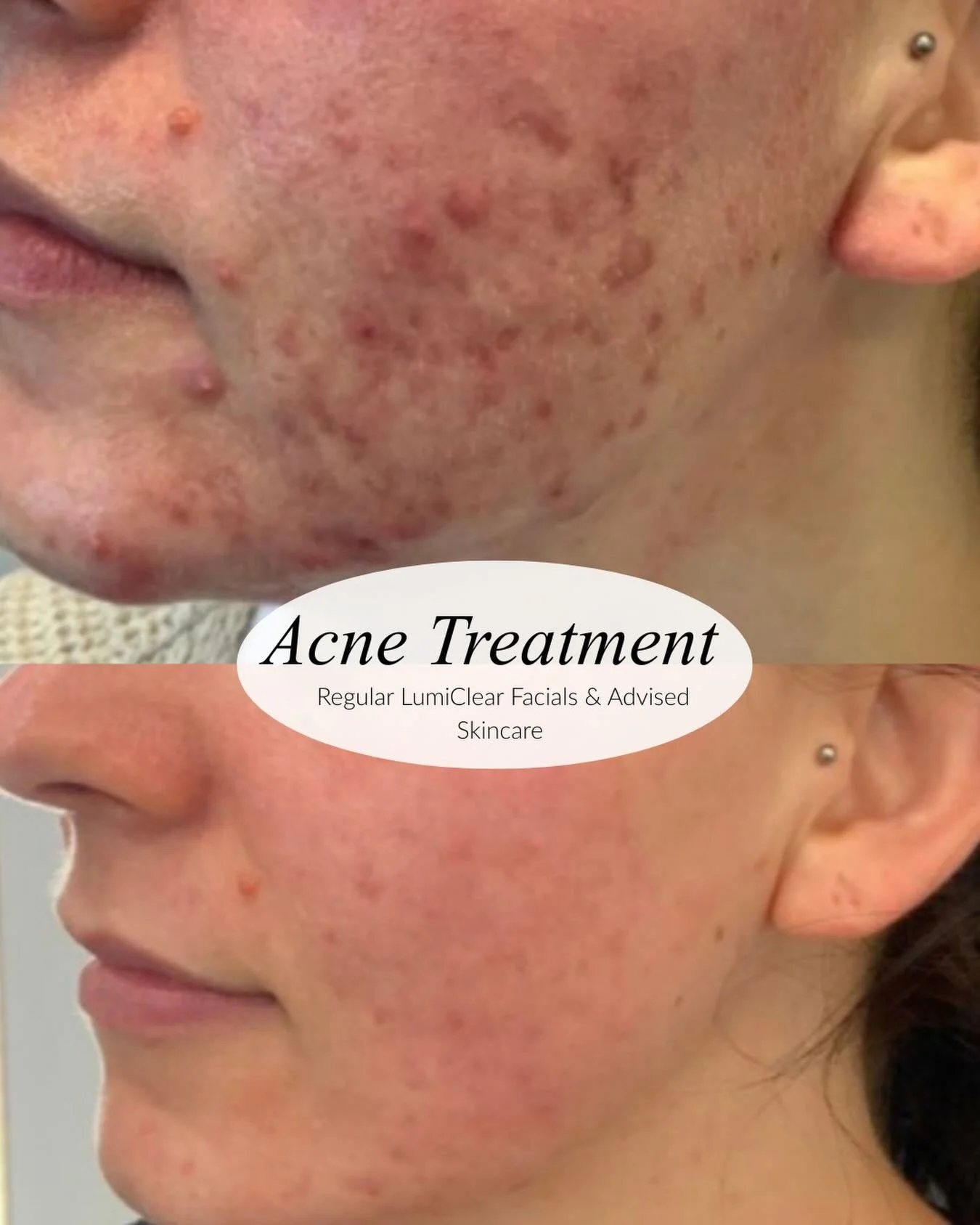
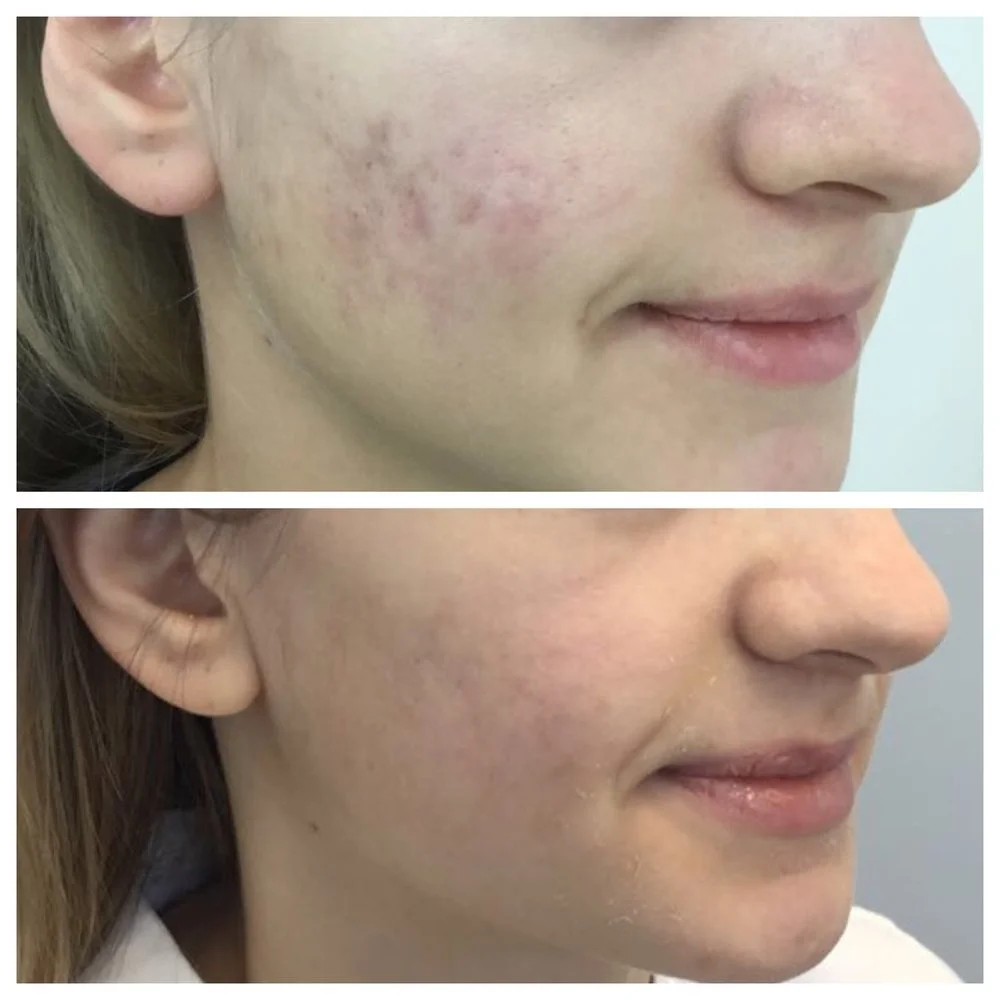
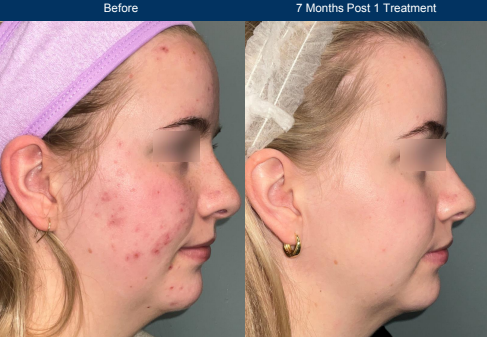
Before and after One Lumiclear Microneedling Acne Management Treatment
That's when the conversation about scarring becomes much more useful.
At Lumière MediSpa, CellRenew Microneedling has an established place in the way we treat acne scarring and skin remodelling. The arrival of UltraClear hasn't changed that. What it has done is give us more options. There are skins where we would still choose CellRenew, scars where ablative resurfacing with UltraClear makes more sense, and selected deeper areas where we may consider Laser-Coring™.
Having more technology doesn't mean using more technology. It means being able to be more selective.
First, what type of acne scars do you actually have?
Most depressed, or atrophic, acne scars are described as rolling, boxcar or ice-pick scars. In reality, many people have a mixture, sometimes alongside enlarged-looking pores, uneven texture, redness and pigmentation left behind by previous breakouts.
Rolling scars tend to create broader, softer depressions and an undulating appearance across the skin. Some are tethered by fibrous bands beneath the surface, which pull the skin downwards and contribute to the shadowing we see.
Boxcar scars tend to have more clearly defined edges. Some are relatively shallow; others extend much further into the dermis.
Ice-pick scars are narrower at the surface but extend deeply into the skin. That depth and shape make them a very different proposition from a shallow boxcar scar.
These aren't simply descriptive names. They tell us something about the structure we're trying to improve, which is why identifying the scar type is an important part of deciding what to do next. Published reviews of acne-scar treatment make the same distinction: shallower boxcar scars tend to be more responsive to resurfacing, rolling scars may require us to consider deeper tethering, while ice-pick scars can be relatively resistant to conventional resurfacing alone.
This is why we don't begin an acne-scar consultation by deciding which machine to use. We begin by looking at the scars.
Where does CellRenew Microneedling fit?
CellRenew Microneedling remains an important part of the way we treat acne scarring at our Oxford clinic. It works by creating controlled micro-injury within the skin, stimulating the repair response and progressive collagen remodelling without using laser energy.
For appropriate atrophic scarring and uneven skin texture, a progressive course of microneedling can be an excellent option. It also allows us to work on the broader quality of the skin rather than concentrating solely on individual indentations.
And this is an important point for us: UltraClear hasn't arrived at Lumière to replace microneedling.
New technology can sometimes be presented as though everything that came before it has suddenly become outdated. That's not how we look at it. If CellRenew is the treatment we believe best suits your skin, that's what we'll recommend. UltraClear simply gives us a different way of creating controlled injury and, importantly, access to different depths and types of tissue remodelling when we need them.
So where does UltraClear fit?
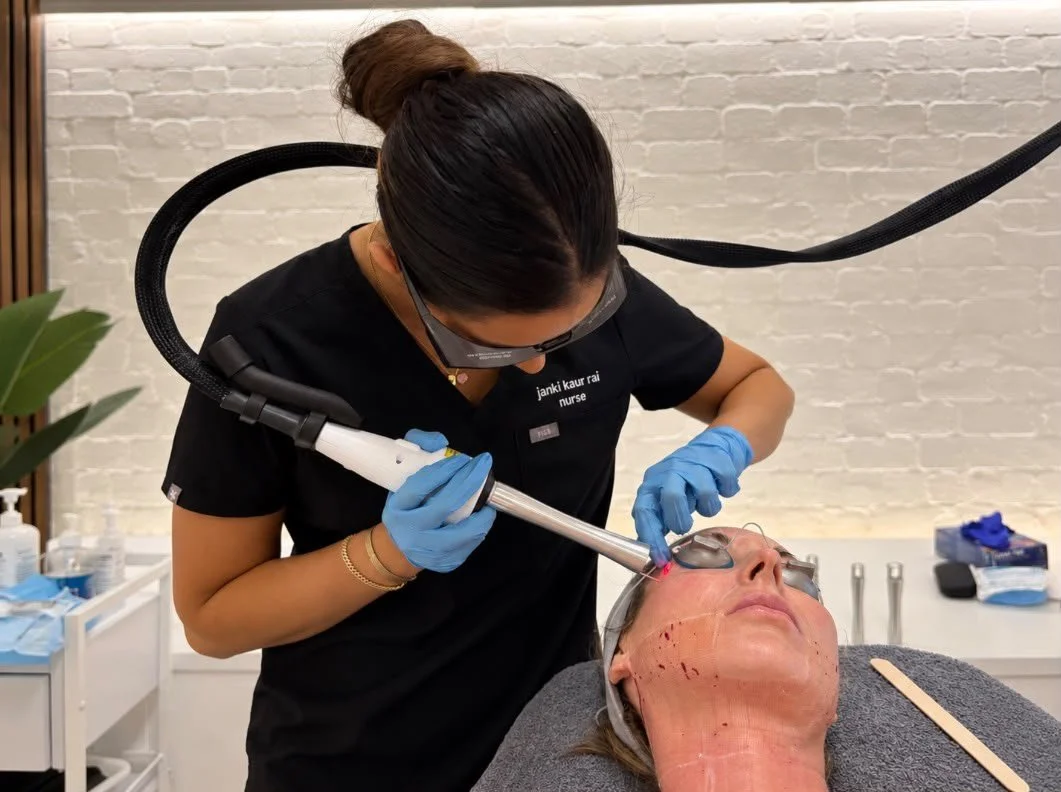
Our UltraClear laser resurfacing treatment uses a 2910nm cold fibre laser with an exceptionally high affinity for water. At its lowest thermal setting, approximately 95% of the laser energy can be directed into ablation, with around 5% remaining as residual heat. In practical terms, this means we can precisely ablate tissue while having much greater control over how much additional thermal injury we create.
For acne scarring, though, what interests us isn't simply the 2910nm wavelength. It's the flexibility of the platform.
We can alter treatment depth, density and thermal effect according to what we're seeing in different areas of the same face. We can use broader resurfacing where texture and shallower scarring are the concern, move into deeper treatment where greater remodelling is required and, in carefully selected areas, incorporate targeted Laser-Coring.
That ability to vary the treatment matters when the scars themselves vary too.
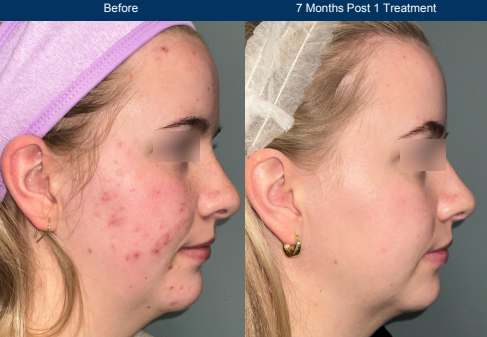
There is also now published clinical research specifically investigating the 2910nm fibre laser for rolling and boxcar acne scars. Participants in the study received three treatments at six-to-eight-week intervals, with statistically significant improvement in acne scarring reported following treatment.
The detail we think matters is that the study looked specifically at rolling and boxcar scars. It didn't prove that UltraClear is the answer to every form of acne scarring, and we wouldn't use it to suggest otherwise.
Rolling scars may need us to look beneath the surface
Rolling scars often create the wider depressions and shadows that give the skin an uneven, wave-like appearance. Where there is significant fibrous tethering beneath a scar, simply treating the surface may not address everything that is contributing to it.
CellRenew Microneedling or UltraClear resurfacing may have a role in stimulating collagen remodelling and improving the surrounding texture, depending on the skin and the nature of the scars. Rolling scars were also among those treated in the published UltraClear acne-scarring study.
But if we believe tethering is an important part of what we're seeing, we need to take that into account rather than repeatedly resurfacing the skin above it and expecting a different result.
This is where having an experienced assessment before beginning a course of treatment becomes particularly important. Sometimes the useful decision isn't which treatment to add, but recognising what a particular treatment cannot reasonably be expected to correct on its own.
What about boxcar scars?
Boxcar scars can respond particularly well to resurfacing when they are relatively shallow. Their more defined edges create a visible transition between the base of the scar and the surrounding skin, and part of what we're trying to achieve through remodelling is to soften that transition and create a more even surface.
Both CellRenew Microneedling and UltraClear may have a role here. Which we favour depends on the depth and distribution of the scarring, the surrounding skin, skin type, previous treatments and the amount of recovery that is appropriate for the patient.
Deeper boxcar scars are more challenging because more of the defect sits within the dermis. This is where the additional control available with UltraClear becomes particularly interesting to us. Rather than simply increasing the intensity across the whole face, we can consider whether particular areas need deeper resurfacing or more targeted structural remodelling.
And that brings us to Laser-Coring.
When might we consider Laser-Coring?
Laser-Coring is quite different from simply turning up the intensity of a resurfacing treatment.
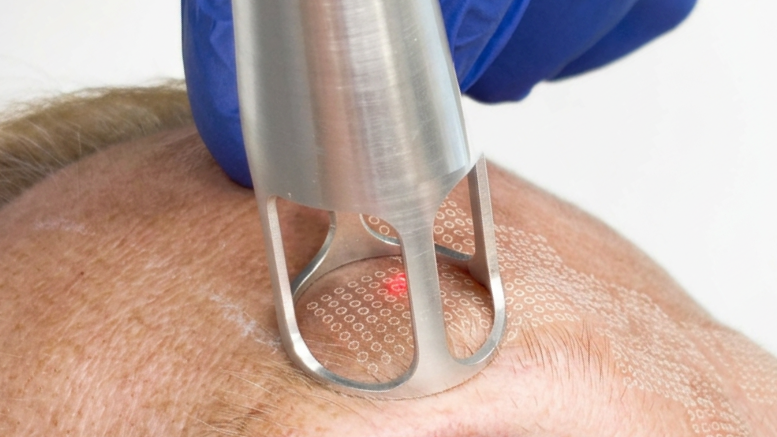
Instead of relying predominantly on thermal energy to create contraction, Laser-Coring physically creates narrow ablative channels extending into the dermis. Tissue is actually removed, with a controlled area of coagulation surrounding each channel.
Published histological research into 2910nm Laser-Coring measured the channels at an average of approximately 980μm in depth and 242.5μm in diameter, with an average surrounding coagulation zone of approximately 104μm.
Why does that interest us? Because selected areas of deeper scarring may need something more than surface refinement. Removing small columns of tissue creates the potential for contraction as those channels heal, followed by longer-term tissue remodelling.
We use the word selected deliberately. We don't believe every acne scar needs coring and we don't automatically need to Laser-Core an entire treatment area because one section would benefit from it. For us, one of its strengths is precisely the ability to use it where we believe it adds something.
It's also important to be clear about the evidence. The published Laser-Coring histology study was small and wasn't specifically designed as an acne-scar efficacy trial. Its mechanism makes Laser-Coring an interesting option for deeper remodelling, but that isn't the same as having evidence that it is universally superior for deep acne scars.
We would rather explain that distinction than make the science sound more certain than it currently is.
Is deeper treatment better for acne scarring?
Not automatically.
It's easy to assume that if a little controlled injury stimulates collagen, a much deeper or more aggressive treatment must produce a better result. Skin isn't quite that simple.
Greater treatment intensity can also mean more inflammation, more recovery and, in some skin types, greater risk. If a particular area doesn't need that level of treatment, there is little value in creating additional injury simply because the technology allows us to.
This is where the different options available to us start to make sense. One patient may be best suited to a progressive course of CellRenew Microneedling. Another may benefit more from ablative resurfacing with UltraClear. With UltraClear, we might treat the broader skin at one depth and use deeper treatment or Laser-Coring only within selected areas.
We don't need every part of the face to receive the same treatment simply because it is being treated on the same day.
And ice-pick scars?
Ice-pick scars deserve a little caution when discussing laser resurfacing because their structure is so different. The opening may be very small, while the scar itself extends deeply into the dermis.
That means treating the surface doesn't necessarily address the full depth of the scar. Published reviews of acne-scar management recognise ice-pick scars as being relatively resistant to conventional resurfacing, and more targeted techniques may sometimes be required.
So if somebody asks whether UltraClear — or CellRenew, for that matter — is the “best” treatment for an ice-pick scar, we wouldn't automatically say yes.
There may be a role for resurfacing within the wider treatment of the skin, but an individual deep scar may require a different approach. Combination treatment can make more sense than repeatedly asking one technology to do something it isn't ideally suited to do.
If that's what we think when we assess your skin, we'll tell you.
We're here to advise, not persuade.
Treating acne scarring isn't only about the indentations
One of the reasons acne scarring can be frustrating is that there may be several things happening at once. The indentations themselves are one part of it, but previous acne can also leave uneven texture, enlarged-looking pores, persistent redness and areas of pigmentation.
Sometimes there is still active acne amongst all of that too.
If there is, getting the acne under better control usually comes first. Depending on what we see, we may recommend topical skincare alongside our LumiClear Microneedling acne management treatment programme before moving our attention towards established scarring.
Once the skin is calmer, we can see much more clearly what we're left with and what genuinely needs treating.
For established scarring, CellRenew and UltraClear then give us different ways of stimulating remodelling. UltraClear's different modes add another layer of choice, allowing us to move from broader resurfacing to deeper, targeted treatment where appropriate.
The advantage isn't having one treatment capable of doing everything. It's having enough options that we don't need to pretend one treatment can.
Acne scarring and darker skin
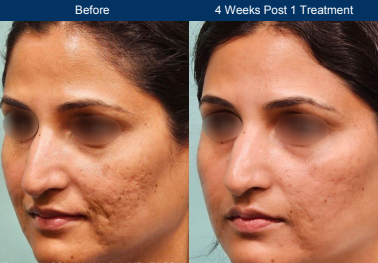
Skin tone matters when we're considering any treatment that deliberately creates inflammation.
Melanin-rich skin has a greater susceptibility to post-inflammatory hyperpigmentation, or PIH. This means the inflammatory response we deliberately create to stimulate repair can itself lead to unwanted pigmentation if the skin isn't assessed and treated appropriately.
A 2024 systematic review examining post-inflammatory hyperpigmentation in skin of colour reinforces both the greater susceptibility of darker skin to PIH and the need for thoughtful selection of procedural treatments.
This doesn't mean darker skin can't be treated for acne scarring. It means we need to consider the individual skin, existing pigmentation, previous history of PIH, recent sun exposure, treatment depth and intensity and, where appropriate, preparation beforehand.
CellRenew doesn't rely on laser energy, while UltraClear gives us the ability to achieve highly efficient ablation with comparatively little residual thermal energy at its lower thermal settings. Those differences can inform our decision, but neither treatment should simply be labelled “safe for all skin types”. Both create a controlled injury and both need to be used with judgement.
We assess the skin in front of us rather than making assumptions based on a treatment name.
How many treatments will I need?
We can't give every acne-scar patient the same number because we're not starting with the same scars.
CellRenew Microneedling is generally approached as a course, allowing repeated controlled stimulation to build remodelling over time. The published UltraClear acne-scarring study used three treatments performed six to eight weeks apart, but that doesn't mean everyone having UltraClear for acne scarring automatically needs three sessions.
Someone with relatively mild textural scarring is very different from someone with extensive rolling scars, deep boxcar scars and pigmentation from previous acne. Skin type, scar depth, previous treatments, the amount of recovery you're comfortable with and what we're realistically trying to achieve all influence the plan.
Acne scars represent structural alterations within the skin. Our aim is therefore meaningful improvement rather than promising that every scar will disappear.
We think that's a much more useful conversation to have.
So, what is the best treatment for acne scarring?
By this point, you've probably realised why we don't think there is a single answer.
If acne is still active, the best starting point may not be scar treatment at all. It may be getting the acne under better control first with appropriate skincare and our LumiClear Microneedling acne management treatment programme.
Once we're treating established scarring, CellRenew Microneedling remains an important option for us. UltraClear gives us another, with the ability to precisely resurface, adjust treatment depth and introduce targeted Laser-Coring where we believe selected areas need more structural remodelling.
And sometimes the right answer will involve something else or a combination of approaches over time.
At Lumière MediSpa in Oxford, we've worked with advanced skin and laser technologies for more than 16 years, treating patients from across Oxford and Oxfordshire. Our role isn't to find a reason to use the newest machine. It's to understand what's happening within your skin and advise you on the approach we believe makes sense.
During your consultation, we'll assess whether acne is still active, the types of scars present, their depth and distribution, your skin type and pigmentation, your medical history, previous treatments and what you would realistically like to improve. Our AURA 3D Skin Analysis can also help us assess and document characteristics including texture, pores, pigmentation and redness and monitor progress where appropriate.
We may recommend CellRenew Microneedling. We may recommend UltraClear resurfacing, targeted Laser-Coring or a combination approach. We may also tell you that something else would be more appropriate.
You don't need to arrive knowing which treatment you need.
That's our job to help you understand.
Your skin. Your appearance. Your choice. Our expertise.