
If you're researching skin resurfacing in Oxford, you may have come across several different technologies, including CO2 laser, NeoGen Plasma and, more recently, UltraClear™. All three may be considered for concerns such as lines and wrinkles, sun damage, uneven skin texture, acne scarring and loss of firmness, but the way they treat the skin is very different.
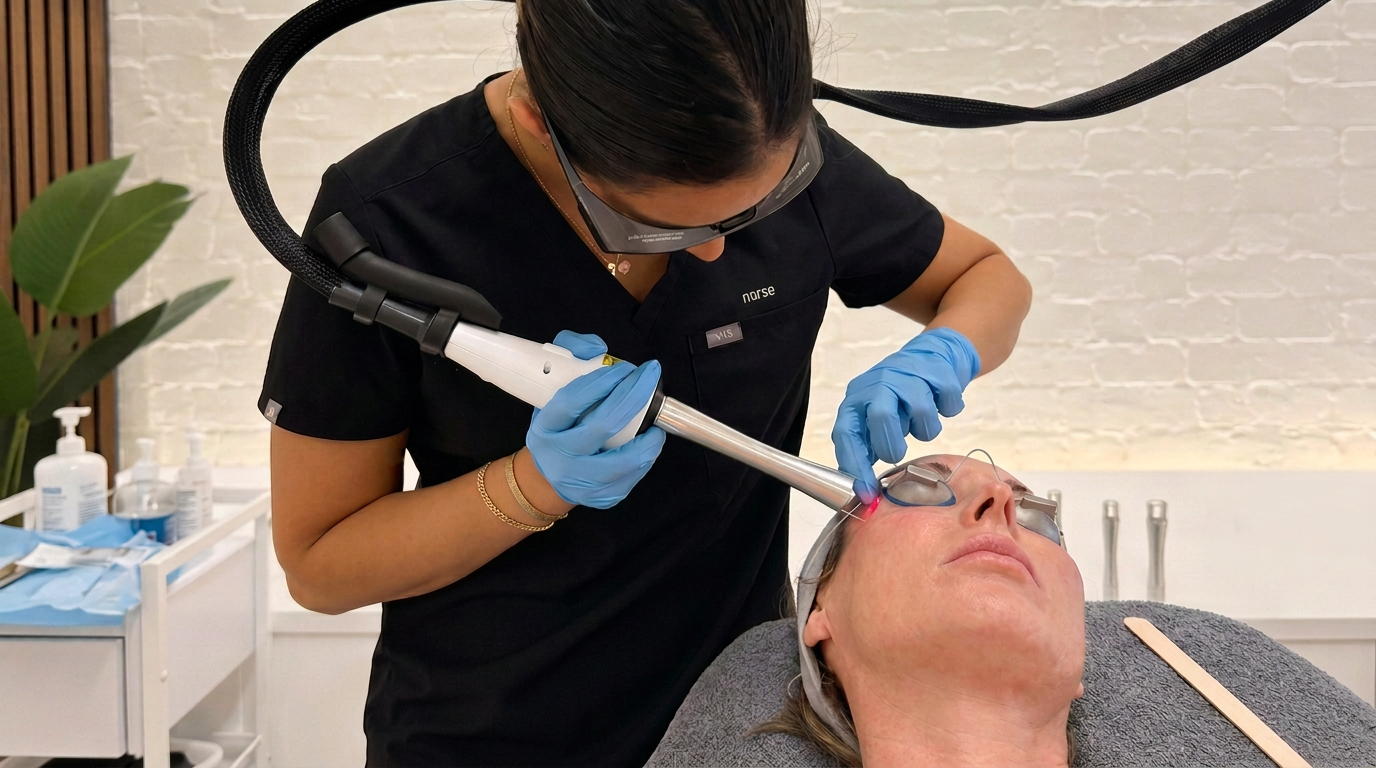
CO2 has been used in aesthetic medicine for decades and combines ablative laser energy with thermal coagulation to stimulate skin renewal and collagen remodelling. NeoGen isn't actually a laser at all, but instead uses nitrogen plasma to deliver controlled thermal energy into the skin. UltraClear takes another approach, using a highly water-absorptive 2910nm cold fibre laser to precisely ablate and resurface tissue while allowing much greater control over the amount of residual heat left behind.
At Lumière MediSpa, we've worked with advanced laser technologies for over 16 years. We don't believe the newest technology is automatically the best, nor that one device is right for every patient. What matters to us is how a technology works, what it can offer the skin and, ultimately, whether it is the right treatment for the person sitting in front of us.
So, if you're comparing CO2, NeoGen and UltraClear, this is what we think is worth understanding.
How does skin resurfacing work?
Skin resurfacing creates a controlled injury within the skin, prompting a process of repair, renewal and longer-term collagen remodelling. Depending on the technology and treatment intensity, it can be used to improve fine lines and wrinkles, sun damage, uneven pigmentation, rough skin texture, enlarged pores, acne scarring and areas of skin laxity.
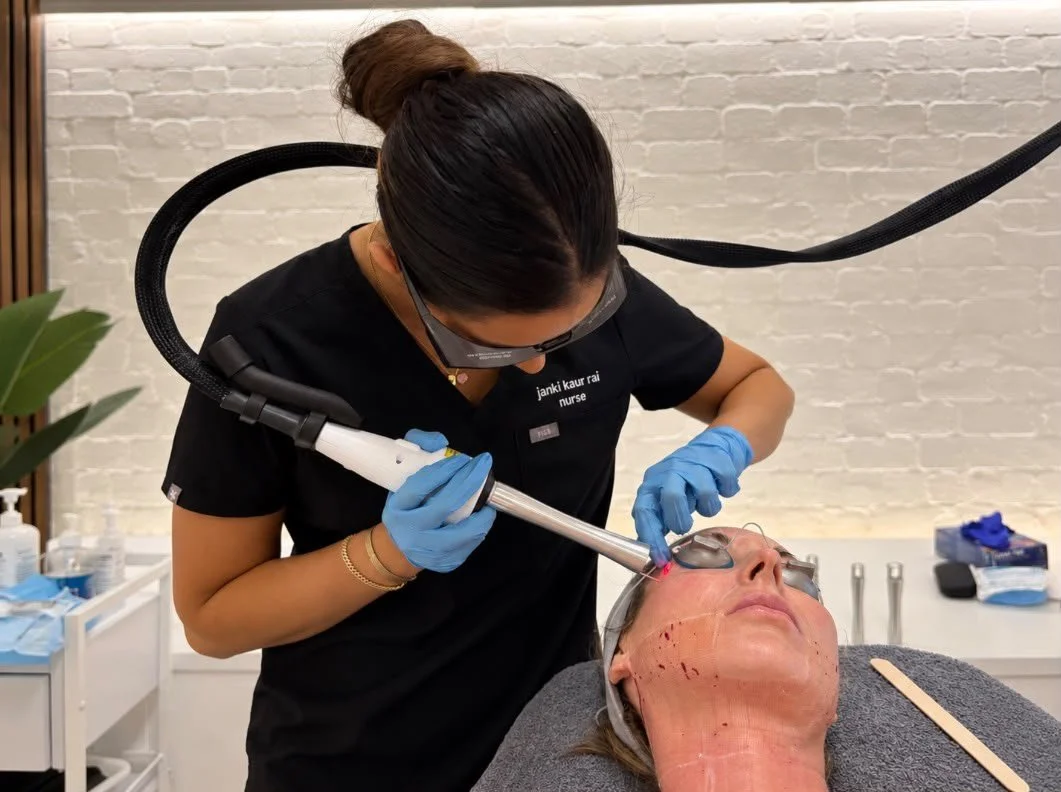
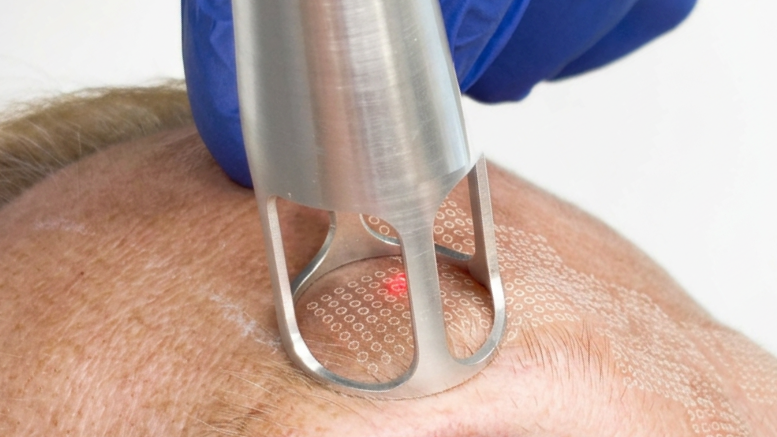
Less thermal damage with the UltraClear™ fractional laser resurfacing treatment at Lumiere Medispa in Oxford
Where these technologies differ is in how that controlled injury is created. CO2 uses laser energy to ablate tissue while producing a surrounding thermal effect. NeoGen uses thermal energy generated from nitrogen plasma without immediately ablating the epidermis. UltraClear uses a 2910nm cold fibre laser at a wavelength with exceptionally high water absorption, allowing tissue to be precisely ablated with considerably less residual heat when desired.
They are all asking the skin to repair and remodel. They're simply getting there in different ways.
How does CO2 laser resurfacing work?
CO2 laser resurfacing is well established and remains an effective treatment when appropriately selected and performed. It operates at a wavelength of 10,600nm, which is strongly absorbed by water within the skin. The laser vaporises water-containing tissue while also creating a surrounding zone of thermal coagulation, and it is this combination of ablation and heat that produces the controlled injury responsible for healing and subsequent collagen remodelling.
Modern fractional CO2 treatments treat columns or fractions of the skin rather than removing the entire skin surface. This was an important development in CO2 resurfacing and can reduce recovery and complications compared with traditional fully ablative treatment.
There is good reason CO2 has remained part of aesthetic medicine for so long. It can produce significant improvements in wrinkles, photodamage and scarring. Its thermal effect, however, is an important part of both how the treatment works and how the skin subsequently heals.
What is NeoGen Plasma?
NeoGen Plasma is often discussed alongside laser resurfacing, but it isn't a laser. Instead, nitrogen gas is converted into plasma and used to deliver controlled thermal energy into the skin.
Rather than immediately vaporising the epidermis, the thermal energy passes through the skin's surface and creates controlled zones of thermal modification. The treated epidermis initially remains intact, effectively acting as a natural biological dressing while new epidermal tissue develops beneath it.
It is therefore a very different approach from an ablative laser. NeoGen deliberately uses controlled heat to stimulate regeneration, contraction and tissue remodelling, and treatment intensity can be adjusted according to the concern being treated and the recovery appropriate for the patient.
What makes UltraClear different?
This is where UltraClear laser resurfacing becomes particularly interesting to us.
UltraClear uses a 2910nm erbium-doped cold fibre laser. This wavelength has an exceptionally high affinity for water, allowing the laser energy to be used very efficiently to vaporise water-containing tissue.
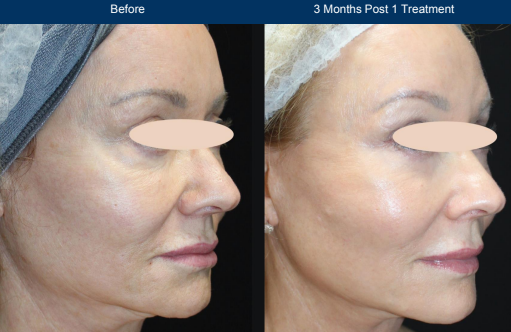
At its lowest thermal setting, approximately 95% of the laser energy is directed into ablation, with around 5% remaining as residual heat. Published research into the 2910nm fibre laser describes an adjustable thermal impact beginning at approximately 5%, compared with an estimated thermal impact of around 60% with CO2.
Those percentages sound impressive, but what really matters is what they mean for the skin.
UltraClear is still an ablative laser. We want controlled injury because that is part of how we stimulate renewal, healing and progressive collagen remodelling. What we don't necessarily need is unnecessary heat around the tissue we're treating.
And this is an important distinction: UltraClear isn't permanently fixed at 5% thermal impact. The technology allows us to adjust the balance between ablation and coagulation according to what we're trying to achieve. For us, that control is far more interesting than simply describing one laser as “hot” and another as “cold”.
UltraClear vs CO2 vs NeoGen: is one better?
Not necessarily — and we think this is where comparisons between technologies can sometimes become too simplistic.
CO2 has a long clinical history and remains a very effective resurfacing treatment. NeoGen takes a different approach, using nitrogen plasma and controlled thermal energy to stimulate regeneration and remodelling. UltraClear interested us because it allows us to achieve ablative resurfacing in a different way, with considerably greater control over how much residual thermal energy accompanies that ablation.
After more than 16 years working with laser technologies, that distinction matters to us. We need to create enough controlled injury to stimulate renewal and collagen remodelling, but more heat doesn't necessarily mean a better result.
It becomes particularly interesting when we consider different skin types. Skin with lower levels of melanin has less natural protection against ultraviolet radiation and is generally more susceptible to cumulative photodamage, including lines, wrinkles and sun-induced pigmentation. Melanin-rich skin has greater natural photoprotection, but brings a different consideration: a greater susceptibility to post-inflammatory hyperpigmentation following inflammation or injury.
That's especially relevant to us in Oxford, where we care for an incredibly diverse population. According to Oxford City Council's 2021 Census data, 54% of residents identify as White British, a further 17% as White non-British, while 29% are from Black or minority ethnic groups. Ethnicity and skin type are not the same thing, of course, but those figures illustrate something we see every day in clinic: the skin we treat in Oxford is diverse, and our approach needs to be too.
Post-inflammatory hyperpigmentation, or PIH, can occur in any skin type but is more common and can be more persistent in darker, melanin-rich skin. A 2024 systematic review of PIH in skin of colour highlights this increased susceptibility and also reports cases where laser treatment itself exacerbated pigmentation.
For us, this is another reason why controlling unnecessary thermal injury matters. UltraClear doesn't remove the possibility of PIH — no responsible practitioner should suggest that — but its ability to precisely ablate tissue without necessarily relying on the same degree of residual heat gives us another way of thinking about resurfacing in patients where pigmentation risk is an important consideration.
Does less heat mean less effective?
This is a question we hear a lot, particularly because heat has traditionally been associated with intensive resurfacing and collagen stimulation. Heat can absolutely be useful; both CO2 and NeoGen demonstrate how controlled thermal injury can stimulate tissue contraction and remodelling.
But there is a difference between the heat we need and heat we don't.
At its lowest thermal setting, UltraClear allows approximately 95% of the laser energy to be used for ablation, leaving around 5% as residual heat. Research into the 2910nm fibre laser also describes an estimated coagulation thickness of approximately 25μm at the referenced setting, compared with approximately 150μm around a CO2 channel.
For us, those figures help explain what “cold” ablation actually means. It doesn't mean there is no heat, and it certainly doesn't mean heat is something we should always avoid. It means we can have much greater control over how much thermal effect accompanies the ablation.
With lighter treatments such as 3DMIRACL™, we can take advantage of predominantly cold ablation to resurface and renew the skin with relatively little residual heat. As we move into deeper UltraClear resurfacing, we can adjust that balance and introduce more controlled coagulation where we believe it will contribute to the result we're trying to achieve.
The skin still responds. Inflammation begins, healing follows and collagen remodelling continues over the months that follow. We're simply reaching that point through a different balance of ablation and heat.
For us, the important point isn't that heat is bad. It isn't. It's about being able to control how much heat we create, where we create it and whether we actually need it.
And what about UltraClear Laser-Coring?
Laser-Coring™ is where UltraClear becomes particularly interesting for concerns that need more than surface resurfacing.
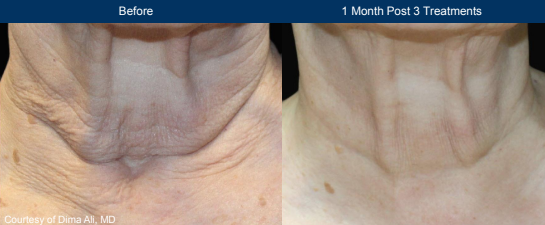
Rather than simply passing more heat into an area in an attempt to create greater contraction, Laser-Coring physically creates narrow ablative channels extending deeper into the dermis. This allows us to selectively treat areas of deeper lines, scarring or lax or bulked tissue where we believe greater contraction and remodelling would be beneficial.
There is still a thermal component — and at this depth, some controlled coagulation can be useful. What interests us is the relationship between actual tissue removal and the amount of surrounding thermal injury.
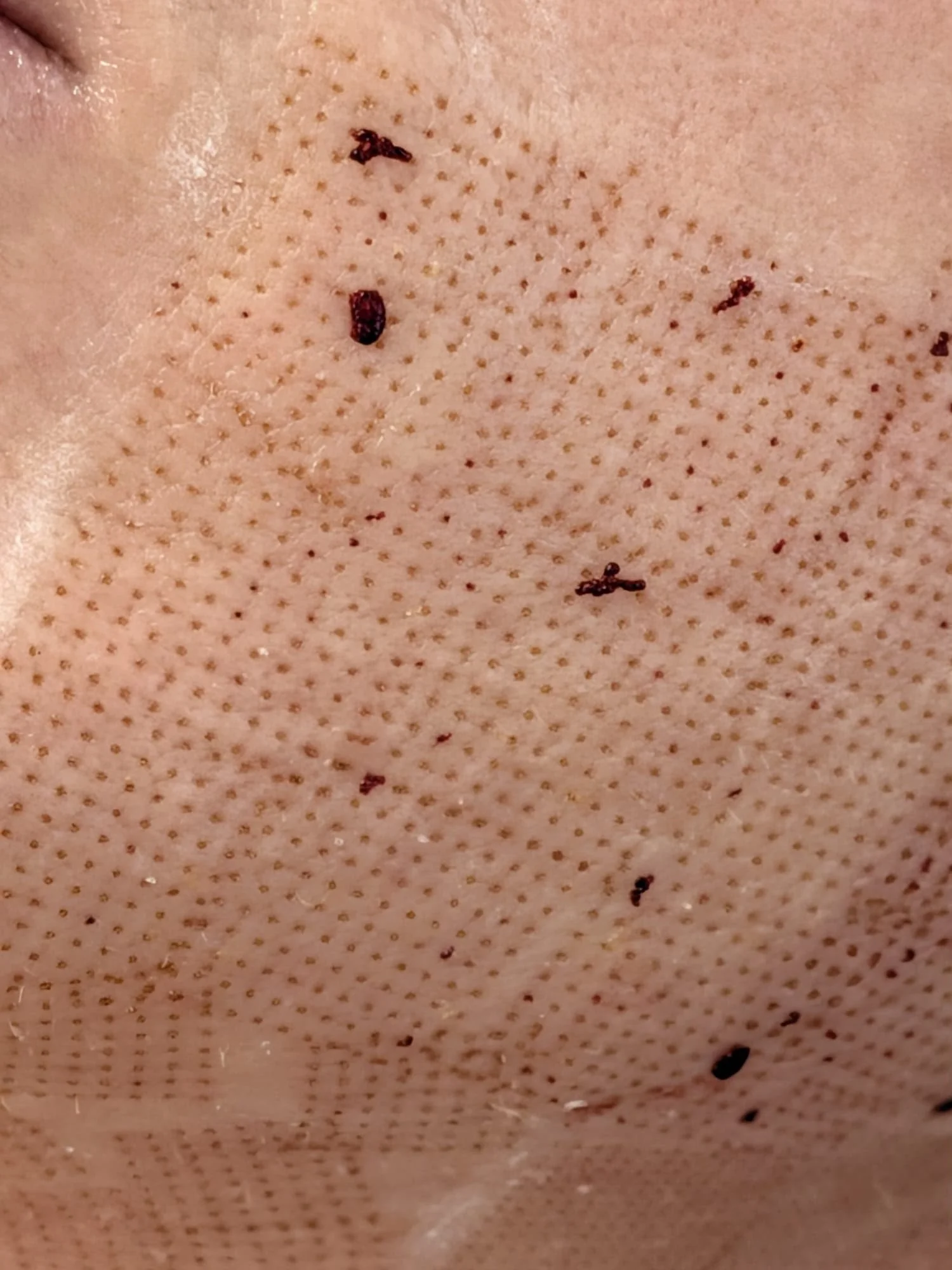
Published histological research into 2910nm Laser-Coring measured the channels at an average depth of approximately 980μm, reaching the mid-to-deep dermis, with an average channel diameter of 242.5μm and a surrounding coagulation zone of approximately 104μm.
What does that actually mean? We are physically removing narrow columns of tissue rather than relying solely on heat to encourage contraction. As those areas heal, the aim is to create contraction and progressive tissue remodelling.
It is also why we use Laser-Coring selectively. Not every area of the face needs it, and not every patient needs it. If only particular areas would benefit from deeper remodelling, we can target those areas rather than automatically treating the whole face in the same way.
The early research is encouraging, but we're equally interested in its limitations. The published Laser-Coring histology study involved only five subjects and Fitzpatrick skin types I–III. Further research is needed to establish its safety and efficacy across darker skin types. We think that's important to say.
Which treatment has the least downtime?
There isn't one simple answer, because CO2, NeoGen and UltraClear can all be performed at different treatment intensities. A lighter treatment and an intensive treatment performed with the same device can have very different recovery periods.
UltraClear demonstrates this particularly well. At the lighter end, 3DMIRACL provides superficial resurfacing and typically involves around 1–3 days of social downtime, although dryness and light flaking may continue for several days. We can then increase treatment depth and intensity with UltraClear resurfacing where greater correction and collagen remodelling are required, while targeted Laser-Coring can be added to selected areas where deeper tissue contraction is appropriate.
So we're cautious when we see resurfacing described simply as having “minimal downtime”. The name of the machine doesn't determine your recovery. The treatment performed with it does.
The more useful question is: what level of treatment does your skin actually need?
Which treatment is best for wrinkles and skin laxity?
Fine surface lines, established wrinkles and true tissue laxity aren't necessarily the same problem, so we don't believe they should automatically receive the same treatment.
Lighter resurfacing may be enough to refine fine lines, texture and overall skin quality. More established wrinkles can require deeper treatment and greater collagen remodelling, while selected areas of tissue laxity may benefit from targeted Laser-Coring.
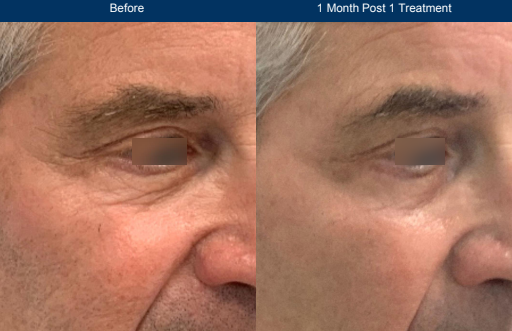
This is one of the things we particularly value about UltraClear. We don't necessarily have to treat every centimetre of the face at exactly the same depth or intensity. We can adapt different aspects of the treatment according to what we see in front of us.
Which treatment is best for acne scarring?
Acne scarring is another good example of why choosing the “strongest” treatment isn't necessarily the answer.
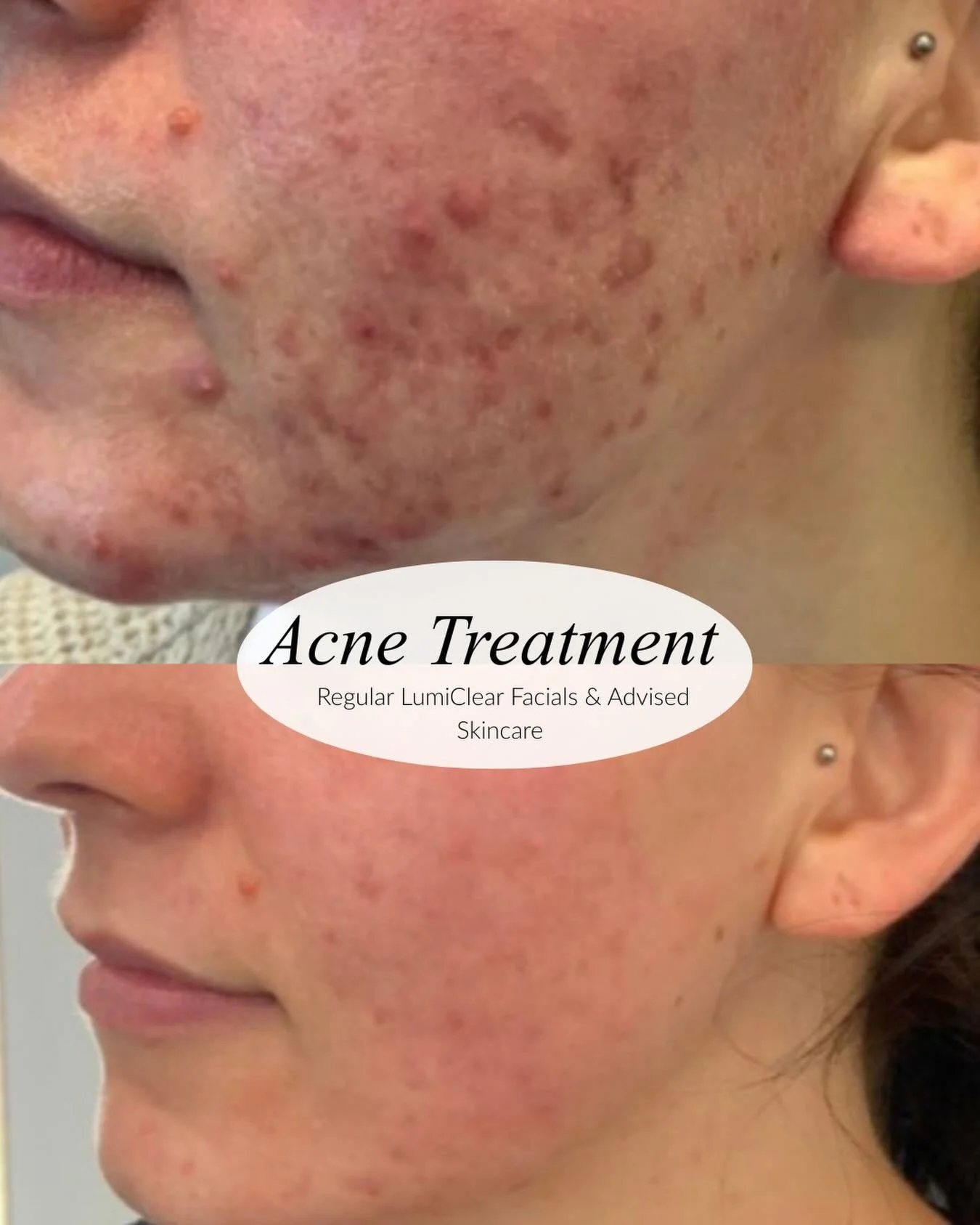
Rolling scars, boxcar scars, ice-pick scars, enlarged pores and post-inflammatory pigmentation may all be described as acne scarring, yet they involve different structures within the skin and don't necessarily respond to the same treatment.
UltraClear allows us to vary treatment depth and density according to the scars we're treating, while deeper resurfacing and targeted Laser-Coring can be considered where more significant remodelling is required. Published research into the 2910nm fibre laser for rolling and boxcar acne scars has reported improvement following treatment.
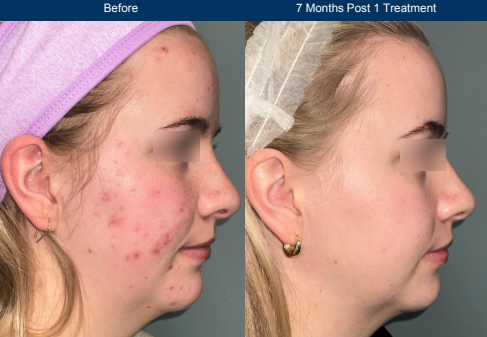
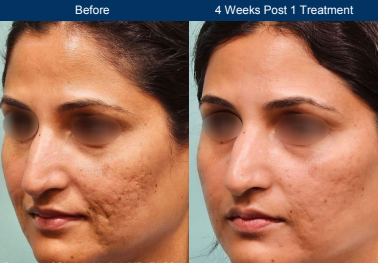
Other types of scarring may benefit from a different treatment or a combination approach. If you'd like to understand the different types of scars and the options available, you can read more about our acne scarring treatments in Oxford.
When we're treating acne scarring, we're not simply choosing a machine. We're looking at the scars in front of us and deciding what each area actually needs.
What about sun damage and pigmentation?
Skin resurfacing can be extremely useful for certain forms of sun damage and uneven pigmentation, but pigmentation is an area where correct assessment really matters.
Sun-induced pigmentation, post-inflammatory hyperpigmentation and melasma aren't interchangeable conditions. They behave differently, and some forms of pigmentation can be aggravated by inappropriate heat or laser treatment.
If pigmentation is one of your main concerns, we may recommend UltraClear or we may advise a completely different approach. Having access to a particular technology doesn't mean we need to use it.
We believe understanding when not to use a device is just as important as knowing how to use it.
Can UltraClear be used on darker skin tones?
Potentially, yes — but this is an area where the details matter far more than blanket claims.
Any resurfacing procedure creates inflammation. In skin with higher levels of melanin, that inflammatory response carries a greater risk of triggering post-inflammatory hyperpigmentation. The published evidence surrounding PIH in skin of colour reinforces why careful treatment selection and appropriate parameters matter.
Ultraclear 3DMIRACL laser treatment on melanin rich skin at Lumiere Medispa in Oxford City.
UltraClear's ability to achieve efficient ablation with comparatively little residual thermal energy at its lower thermal settings is particularly interesting here. Reducing unnecessary thermal injury gives us one less contributor to inflammation to contend with, but it doesn't make PIH impossible and it doesn't mean we can treat every skin type in exactly the same way.
We still consider your individual skin tone, existing pigmentation, previous history of PIH, recent sun exposure, medical history, treatment depth and density and whether your skin would benefit from preparation beforehand.
This is precisely why we assess rather than assume.
Why did Lumière MediSpa choose UltraClear?
We've worked with advanced laser technologies for over 16 years. During that time, we've seen technologies evolve, devices arrive and trends come and go.
Being new isn't enough for us.
When we invest in a new technology, we want it to offer something meaningful that adds to how we can treat and care for our patients. UltraClear did.
Its 2910nm cold fibre technology gives us a highly controlled method of ablative resurfacing while allowing us to determine how much residual thermal effect we actually want. Just as importantly, it gives us options. We can move from lighter 3DMIRACL resurfacing through more intensive UltraClear treatments and add targeted Laser-Coring where selected areas require greater tissue contraction and remodelling.
That means we're not trying to fit every patient into the same laser protocol. We can adjust what we do according to the skin in front of us, the concern we're treating and the amount of recovery that is appropriate.
Lumière MediSpa was the first clinic to introduce UltraClear to Oxford. Being first, however, matters less to us than being certain a technology deserves a place in our clinic.
After more than 16 years working with lasers, we believe UltraClear does.
How do I know which skin resurfacing treatment I need?
You shouldn't need to decide this from Google. Researching CO2 laser, NeoGen Plasma and UltraClear can help you understand what's available, but choosing a machine shouldn't be the starting point.
Your skin should be.
During your consultation at Lumière MediSpa, we'll assess your skin, medical history, concerns, expectations and the amount of recovery that is realistic for you. Our UltraClear consultations are also supported by AURA 3D Skin Analysis, allowing us to look more objectively at characteristics including pigmentation, redness, pores, texture and wrinkles and, where appropriate, monitor your progress over time.
We may recommend 3DMIRACL, deeper UltraClear resurfacing or targeted Laser-Coring. We may also advise that another treatment would be more appropriate.
We're here to advise, not persuade.
If you're researching CO2 laser resurfacing, NeoGen Plasma or other skin resurfacing treatments in Oxford, you can discover more about UltraClear laser resurfacing at Lumière MediSpa or arrange a consultation to understand which approach may be appropriate for your skin.
Your skin. Your appearance. Your choice. Our expertise.